

.svg)
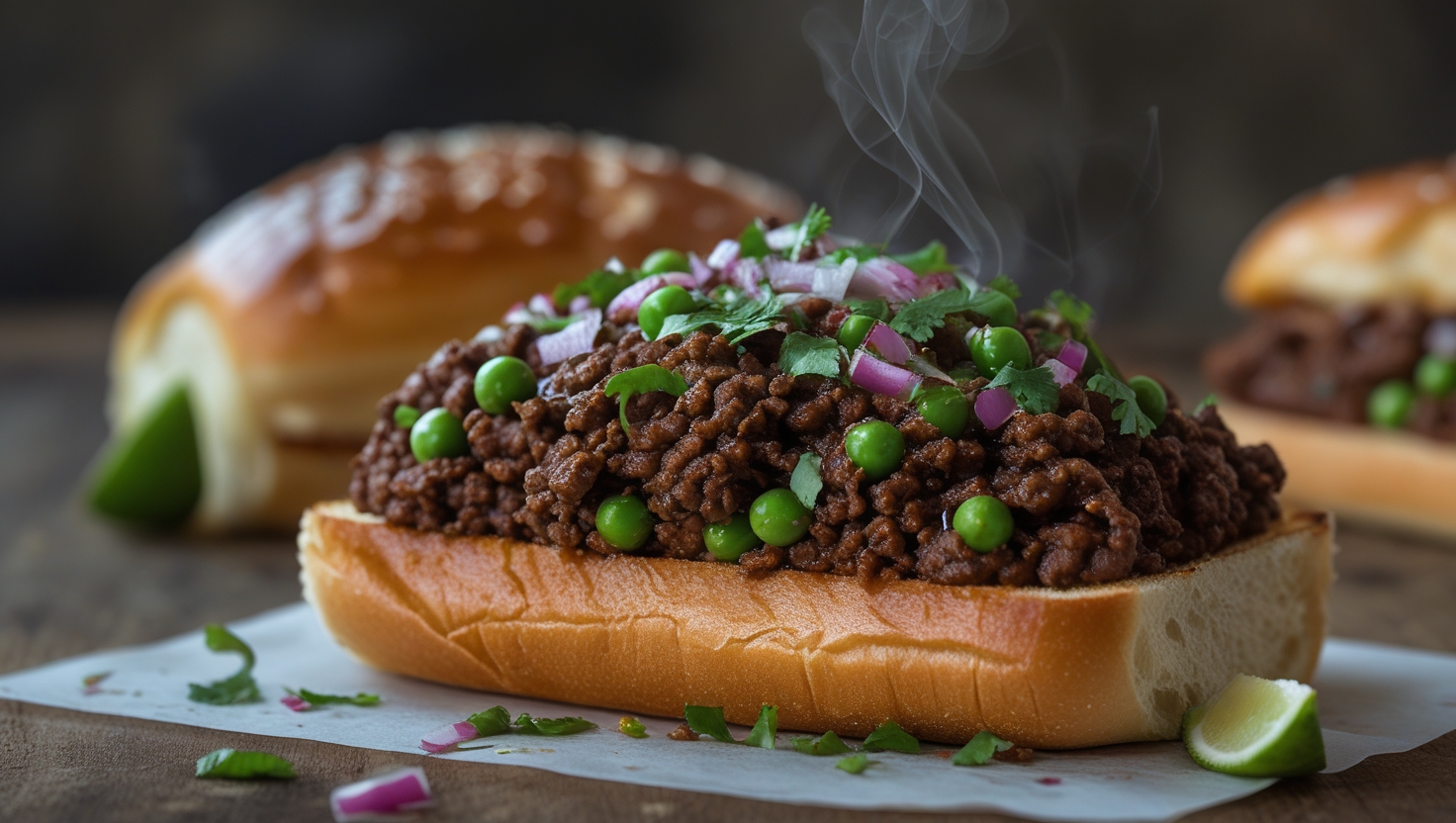

Dishoom Keema Pau Recipe
Bombay-style spiced lamb mince, simmered low and slow with a bright coriander-mint paste, served in toasted buttered rolls.
Prep
Cook
Serve
Kcal
- 2 inch piece fresh ginger, grated
- 6-7 garlic cloves, minced
- 1/2 cup fresh mint leaves, roughly chopped
- 1 cup coriander leaves, roughly chopped
- 2 spring onions, roughly chopped
- 2 whole green chillies plus 1 tablespoon finely chopped green chilli
- 3 tablespoons vegetable oil
- 1 red onion, finely diced
- 3 teaspoons ground coriander
- 1/2 cup full-fat Greek yoghurt
- 500g lamb mince
- 1 1/4 teaspoons fine sea salt
- 2 bay leaves
- 1/3 teaspoon plain flour
- 1/4 cup frozen peas
- 4 soft white bread buns, to serve
- Butter, softened, for spreading
- Coriander leaves, for garnish
- Chopped red onion, for garnish
- Lime wedges, for serving
Step 1
Grate the ginger and mince the garlic finely, then set aside together. Roughly chop the mint, coriander leaves, spring onions and 1 whole green chilli, then blitz them together into a loose, bright green paste. Set this aside too — you'll know it's ready when it's mostly smooth with just a little fleck of texture.Step 2
Heat the vegetable oil in a wide pan or deep frying pan over medium heat. Add the diced red onion and fry for about 5 minutes, stirring regularly, until it turns from raw white to a soft pale pink — this is the base of your flavour, so don't rush it or let it catch.Step 3
Stir the ginger-garlic mixture into the softened onion and cook for 2 minutes, stirring often, until the raw garlic smell mellows into something fragrant and toasty.Step 4
Add the ground coriander and cook for 2 minutes, stirring constantly so it doesn't stick or scorch on the base of the pan — it should smell warm and nutty rather than bitter.Step 5
Turn the heat up slightly and stir in the Greek yoghurt. Keep stirring and let it bubble and cook until it visibly separates from the oil, showing little glossy pools around the edge of the mixture — this takes a few minutes and tells you the base is properly cooked out.Step 6
Add the lamb mince, breaking it up thoroughly with the back of a spoon so there are no lumps. Stir in the salt and bay leaves, then cook, stirring occasionally, until the liquid that comes out of the meat evaporates and the mince starts to fry rather than stew — this can take around 8-10 minutes.Step 7
Sprinkle over the plain flour and stir it through evenly; this helps the sauce cling to the mince rather than sitting watery at the bottom of the pan.Step 8
Stir in the green herb paste, then turn the heat right down to low. Cover and simmer gently for 20 minutes, stirring occasionally, until the mince looks glossy and well coated and the sauce has thickened around it.Step 9
Stir in the frozen peas and the remaining whole green chilli. Simmer uncovered for a further 15 minutes, until the peas are tender and bright green and the sauce has reduced to a thick, clinging consistency rather than a watery one. Check the lamb is piping hot right through with no pink remaining before you take it off the heat.Step 10
Take the pan off the heat and let the keema stand for 10 minutes; this short rest lets the spices settle and the flavours come together properly.Step 11
Split the bread buns, spread both cut sides generously with softened butter, and toast them in a hot dry pan or under the grill until golden at the edges. Pile the keema onto the toasted buns and scatter over fresh coriander leaves and chopped red onion. Serve immediately with lime wedges for squeezing over.
Can I make keema pau ahead of time?
Yes, the mince keeps well in the fridge for up to 2 days and often tastes better the next day. Reheat gently until piping hot and toast the buns fresh before serving.
Can I freeze the leftover keema?
Yes, cool it quickly, then freeze in a sealed container for up to 2 months. Defrost fully in the fridge and reheat until steaming hot all the way through before eating.
What can I use instead of lamb mince?
Beef mince works well as a straightforward swap using the same quantity and method. Always cook mince thoroughly until no pink remains and it's piping hot throughout.
My sauce turned out too watery, what went wrong?
This usually means the mince or yoghurt stage wasn't cooked long enough to reduce properly. Simmer uncovered for longer towards the end so the liquid can evaporate down.
What can I serve instead of bread buns?
Soft dinner rolls or even warm flatbread work nicely if you can't find suitable buns. Toasted paratha is also a good substitute if you have some in the freezer.
Is this recipe very spicy?
It's gently warming rather than fiery, with the chilli heat coming mainly from the fresh green chillies. Use milder or spicier chillies depending on your preference.
What it actually is
Keema pau is Bombay street food at its most comforting: richly spiced minced lamb simmered down until thick and glossy, scooped up with a soft, buttered, toasted bread roll instead of rice or flatbread. The bread soaks up the sauce as you eat, so the mince needs to be thick enough to cling rather than run.
Building the base
The foundation here is onion cooked until pink and soft, then ginger and garlic cooked just long enough to lose their rawness, followed by yoghurt cooked out until it splits from the oil. That splitting stage matters more than people think — it's what gives the finished sauce its depth rather than a thin, sour edge.
The spices that matter
This version keeps things fairly restrained: ground coriander for warmth, and the real heat and brightness coming from fresh green chilli and a blended herb paste of coriander, mint and spring onion rather than a long list of dried spices. It's the freshness of that green paste stirred in near the end that gives keema pau its distinctive character.
Make ahead and reheating
The mince actually improves after a rest, so making it a few hours or even a day ahead and reheating gently on the hob works well. Keep it covered in the fridge and reheat until piping hot throughout before serving, toasting the buns fresh just before you're ready to eat.
Troubleshooting
If the sauce looks watery rather than clinging, it usually means the mince wasn't cooked long enough after the yoghurt stage, or the final simmer was rushed. Keep it on a gentle simmer uncovered towards the end so excess liquid can evaporate, and don't skip the flour, which helps everything come together.