

.svg)

Black Daal Recipe
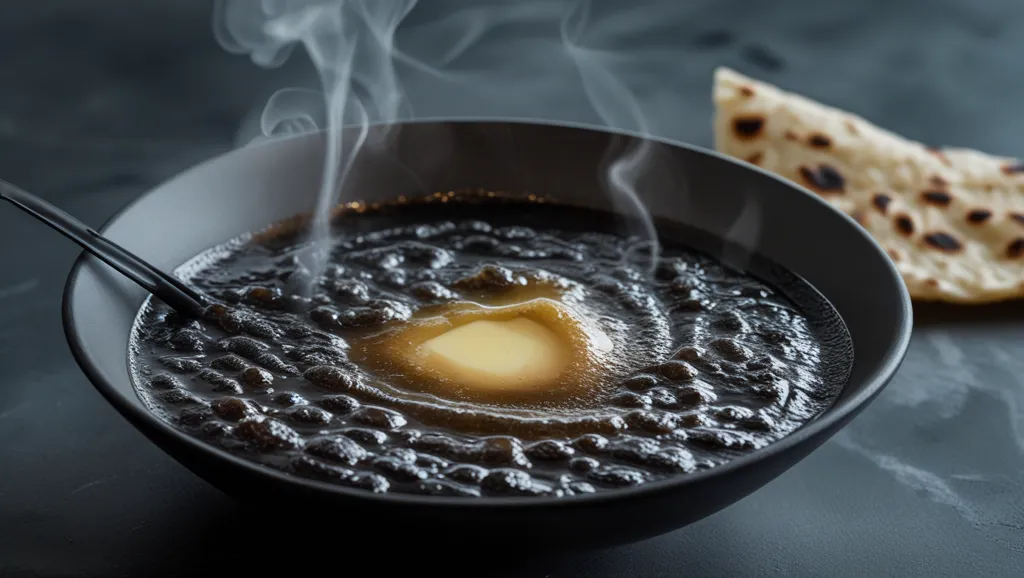
A slow-cooked bowl of whole black urad lentils, simmered until velvety, then enriched with butter and cream for real comfort food.
Prep
Cook
Serve
Kcal
- 300g whole black urad dal (whole black gram / sabut urad)
- 4 litres cold water
- 12g garlic paste
- 10g ginger paste
- 70g tomato purée
- 8g fine sea salt
- ⅔ tsp deggi mirch chilli powder (or a mix of mild paprika and a small pinch of cayenne)
- ⅓ tsp garam masala
- 90g unsalted butter
- 90ml double cream
- Chapatis, roti or naan, to serve
Step 1
Tip the urad dal into a large bowl, cover with cold water and swirl it around for about 10 seconds. Let it settle, pour off the cloudy water, and repeat three or four times until the water runs almost clear. Skipping this step leaves the finished daal gritty.Step 2
If you have the time, cover the rinsed dal with fresh cold water and leave it in the fridge overnight, 8-12 hours. This isn't essential, but it softens the lentils faster and gives an even creamier result. If you're short on time, simply move straight on to boiling.Step 3
Drain the dal and tip it into a large pot with at least 4 litres of cold water. Bring to the boil, then keep it at a steady, rolling simmer for 2-3 hours (around 2 hours 30 minutes on average), skimming off any froth that rises. Top up with more boiling water whenever the level drops close to the grains. It's ready when the skins are coming away and a grain pinched between your fingers feels creamy, not crumbly or chalky, at its centre.Step 4
Turn off the heat and leave the pot to sit, covered, for 15 minutes. This settles the grains and lets them finish soaking up moisture, so the texture turns noticeably silkier.Step 5
While the dal rests, stir the garlic paste, ginger paste, tomato purée, chilli powder, garam masala and fine sea salt together in a small bowl until you have a smooth, thick paste. This concentrated mixture is where most of the daal's flavour will come from, so make sure there are no dry lumps of spice left.Step 6
Carefully ladle off the cooking water from the dal, taking care not to lose the softened grains, then pour on enough freshly boiled water to cover the dal by 3-4cm.Step 7
Bring the pot back to the boil over medium-high heat, then stir in the aromatic paste and the unsalted butter. Keep it at a lively boil for 30 minutes, stirring constantly so nothing sticks to the base of the pot, until the butter has melted in, there are no streaks of tomato purée left and the liquid has started to thicken.Step 8
Turn the heat right down to low and simmer gently for 1 to 1.5 hours (about 1 hour 15 minutes), stirring often so nothing catches on the base of the pot. Add a splash of boiling water if it looks like it's drying out. The daal is ready when it has darkened to a deep, glossy brick colour and the sauce clings thickly to the spoon; the creaminess should come from the grains breaking down, not simply from the water boiling away, so resist the urge to just reduce it hard and unattended.Step 9
Pour in the double cream and simmer for a further 15 minutes, stirring occasionally, until it's completely incorporated and the daal looks glossy and rich rather than streaky.Step 10
Give the daal a final taste. It should be deeply savoury, warmly spiced and velvety rather than sharp or thin; stir in a touch more salt only if it needs it.Step 11
Ladle the daal into warm bowls while it's piping hot, and serve straight away with chapatis, roti or naan for scooping up every bit of sauce.
Can I make this ahead of time and reheat it?
Yes, it often tastes even better a day later. Cool it quickly, keep it covered in the fridge for up to 3 days, and reheat gently on the hob, adding a splash of water or cream if it's thickened too much.
Can I freeze black daal?
Yes, freeze it in an airtight container for up to 2 months. Defrost fully in the fridge overnight, then reheat slowly on the hob until piping hot throughout, loosening with a little water if needed.
What can I use instead of deggi mirch chilli powder?
A mix of mild paprika with a very small pinch of cayenne gives a similar gentle colour and warmth without the heat of a stronger chilli powder.
Why isn't my daal turning creamy?
The lentils probably needed longer at the boiling stage. They must be fully soft, with skins loosening and centres creamy when pinched, before you move on, otherwise they won't break down into the sauce.
Do I really need to soak the lentils overnight?
No, it's optional. Soaking speeds up cooking slightly and can improve texture, but the recipe works perfectly well if you skip straight to the long boil.
Is there a lighter version without butter and cream?
You can reduce both, but they're what gives this daal its signature richness, so cutting them out completely will noticeably change the texture and flavour.
What should I serve with black daal?
Warm chapatis, roti or naan are ideal for scooping, and a spoonful of plain rice alongside makes it a heartier meal.
What it actually is
Black daal is made from whole urad dal, sometimes called black gram, rather than the split and skinned version used in many quicker lentil dishes. Cooked whole and unhurried, the lentils slowly break down into the cooking liquid itself, which is what gives the finished dish its deep, almost meaty richness and dark colour, rather than that colour coming from added spice alone.
Building the base
The garlic, ginger, tomato purée, chilli and garam masala are mixed into a single paste before they ever touch the heat, rather than being fried separately as you might in a lighter curry. That paste, along with butter, is stirred straight into freshly boiled water with the part-cooked lentils, so it has hours to melt into the dish rather than sitting on top of it.
The spices that matter
This is a restrained spice mix compared with many curries: just a small amount of chilli powder for warmth and a little garam masala for background sweetness and depth. The tomato purée adds a gentle tang, and the salt is measured precisely rather than by taste from the start, since the long simmer concentrates every flavour considerably as the liquid reduces.
Troubleshooting
If your daal tastes thin or watery after the long simmer, it usually means the lentils weren't cooked soft enough at the boiling stage, so they never broke down properly to thicken the sauce naturally. If it catches or tastes scorched, the heat was too high during the long simmer; keep it low and stir often, especially once the sauce starts to thicken and cling to the base of the pot.