

.svg)

Chicken Yakitori Recipe
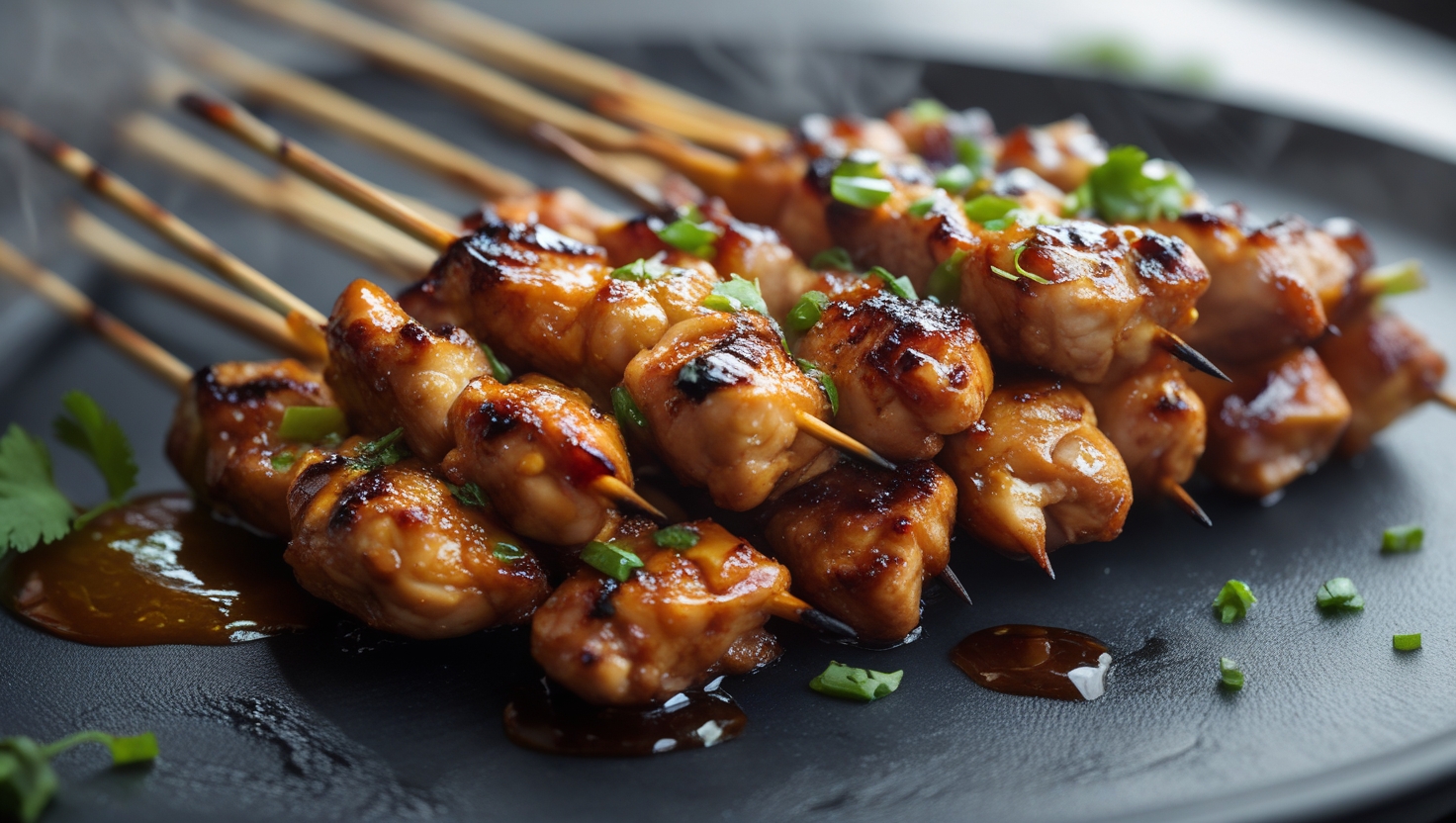
Juicy chicken thigh skewers griddled until charred, then brushed with a glossy homemade teriyaki sauce for that sticky, savoury finish.
Prep
Cook
Serve
Kcal
- 8 chicken thighs, boneless and skinless
- 2 spring onions, chopped
- 2 handfuls of coriander, chopped
- salt and pepper, to taste
- 8 tbsp light soy sauce
- 220g caster sugar
- 2 tbsp dark soy sauce
- 4 tbsp sake (or dry sherry as an alternative)
Step 1
Pop 16 wooden skewers into a bowl of cold water and leave them to soak for at least 20 minutes. This stops them scorching on the griddle later, so do not skip it.Step 2
In a small saucepan, combine the light soy sauce, caster sugar, dark soy sauce and sake. Set over a medium heat and stir often until every grain of sugar has dissolved into the liquid, about 1-2 minutes.Step 3
Keep the sauce on a gentle simmer for 5 minutes, stirring occasionally, until it thickens slightly and turns glossy and deep amber. It should coat the back of a spoon rather than run straight off; if it looks watery, give it another minute or two.Step 4
Cut the chicken thighs into bite-sized chunks, roughly 3-4cm pieces. Season lightly with salt and pepper and scatter over the chopped spring onion and coriander, tossing to coat the pieces evenly.Step 5
Drain your soaked skewers and thread the seasoned chicken pieces on, dividing it evenly across all 16 skewers so each one cooks at the same rate.Step 6
Place a ridged griddle pan over a high heat and let it heat through for about 30 seconds until it is properly hot; you should hear a sharp sizzle the moment the chicken touches it.Step 7
Lay the skewers onto the hot griddle and leave them undisturbed for 10 seconds at a time before rotating, working around each skewer so the ridges leave clear bar marks all over the surface.Step 8
Continue turning and grilling the skewers for around 8-10 minutes in total, until the chicken is charred in stripes on the outside and no longer pink in the middle; the thickest piece should reach 75C or the juices should run completely clear.Step 9
Brush or spoon a third of the warm teriyaki sauce over the skewers while they are still on the griddle, turning them so the glaze catches slightly and turns sticky, about 1 minute.Step 10
Transfer the skewers to a serving plate and drizzle over a little more of the remaining sauce, keeping any leftover sauce on the side for dipping.
Can I make chicken yakitori without wooden skewers?
Yes, metal skewers work just as well and do not need soaking, though you may need oven gloves as they get very hot on the griddle.
What can I use instead of sake in the teriyaki sauce?
Dry sherry is a good stand-in if you cannot find sake, giving a similar depth without needing a specialist bottle just for one recipe.
Can I cook this on a barbecue instead of a griddle pan?
Absolutely, a hot barbecue grill is actually closer to how yakitori is traditionally cooked and will give you an even smokier char.
How do I store leftover teriyaki sauce?
Keep any extra sauce in a sealed jar in the fridge for up to a week; it also freezes well in small portions for up to three months.
Why is my chicken chewy instead of tender?
This usually means the pieces were cut too small and overcooked, or the griddle was not hot enough to sear quickly, so the chicken dried out over a longer cook.
Can I use chicken breast instead of thighs?
You can, but thighs stay much juicier under high heat since they have more fat; if using breast, watch the timing closely to avoid drying it out.
What it actually is
Yakitori is Japan's answer to the humble skewer: small pieces of chicken threaded onto sticks and grilled hard over intense, direct heat until the outside chars while the inside stays juicy. Traditionally cooked over charcoal, this version uses a ridged griddle pan to mimic those distinctive bar marks and smoky edge at home, then finishes everything with a glossy, homemade teriyaki glaze rather than a shop-bought bottle.
The marinade and why
Rather than marinating the raw chicken for hours, this recipe seasons the meat simply with salt, pepper, spring onion and coriander, then lets the teriyaki sauce do the real flavour work as a glaze applied during and after cooking. This keeps the chicken skin catching char quickly on the hot griddle without burning sugar too early, while the sauce builds a sticky, caramelised coating right at the end.
Heat and timing
The griddle needs to be properly hot before the chicken goes anywhere near it, since a lukewarm pan will steam the meat instead of charring it. Turning the skewers every 10 seconds in the first stage builds those crosshatch marks evenly, and the total cooking time of 8-10 minutes should leave the chicken firm, opaque throughout and completely clear-juiced with no pink remaining.
What most versions get wrong
The most common mistake is brushing on the full amount of sauce too early, which causes the sugar to catch and burn on a screaming hot griddle before the chicken has even cooked through. Adding just a third of the sauce near the end, once the meat is properly cooked, gives you that sticky lacquered finish without any bitterness.