

.svg)
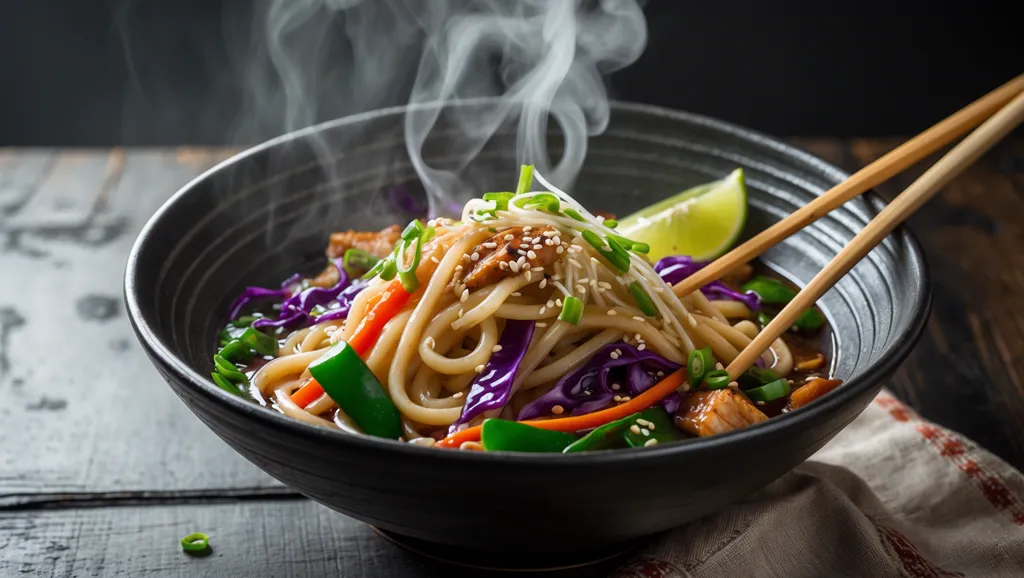

Yaki Udon Recipe
Master how to make authentic Yaki Udon at home with this quick and easy recipe. Thick, chewy udon noodles stir-fried with fresh vegetables and umami-rich sauce create a restaurant-quality Japanese dish in minutes. Perfect weeknight dinner that's faster than takeout!
Prep
Cook
Serve
Kcal
- 300g fresh udon noodles
- 2 tbsp vegetable oil
- 150g chicken breast, thinly sliced (or firm tofu for vegetarian option)
- 1 red pepper, deseeded and thinly sliced
- 1 carrot, julienned
- 100g shiitake mushrooms, sliced (or button mushrooms)
- 100g bean sprouts
- 2 spring onions, sliced diagonally
- 1 tbsp sesame seeds
- For the sauce:
- 3 tbsp soy sauce
- 2 tbsp mirin (or 1 tbsp honey mixed with 1 tbsp water)
- 1 tbsp oyster sauce
- 1 tsp grated ginger
- 2 cloves garlic, minced
- 1 tsp chili flakes (adjust to taste)
Step 1
Prepare the udon noodles according to the package instructions. Most fresh udon noodles only need to be soaked in boiling water for 1-2 minutes. Once ready, drain thoroughly and rinse under cold water to prevent sticking. Set aside.Step 2
In a small bowl, combine all the sauce ingredients: soy sauce, mirin, oyster sauce, grated ginger, minced garlic, and chili flakes. Mix well and set aside.Step 3
Heat 1 tablespoon of vegetable oil in a large wok or frying pan over high heat. Once hot, add the chicken pieces and stir-fry for about 4-5 minutes until they're golden brown and cooked through. If using tofu, cook until it's golden on all sides. Remove from the wok and set aside.Step 4
In the same wok, add the remaining oil. Toss in the sliced red pepper, julienned carrot, and mushrooms. Stir-fry for 2-3 minutes until the vegetables are just tender but still retain some crunch.Step 5
Return the cooked chicken to the wok, add the bean sprouts and half of the spring onions. Stir-fry for another minute to combine everything well.Step 6
Add the prepared udon noodles to the wok. Pour the sauce over everything and toss well, ensuring the noodles and all ingredients are coated evenly. Continue stir-frying for about 2-3 minutes until everything is hot and well combined. If the noodles start to stick, you can add a splash of water.Step 7
Turn off the heat and transfer the yaki udon to serving plates. Sprinkle with the remaining spring onions and sesame seeds. For an authentic Wagamama touch, serve immediately while piping hot, perhaps with a wedge of lime on the side for an extra zing. Enjoy your homemade restaurant-quality yaki udon!
What ingredients are used in Yaki Udon from Wagamama?
Wagamama's Yaki Udon features fresh udon noodles, chicken breast (or tofu), red pepper, carrot, shiitake mushrooms, bean sprouts, and spring onions. The signature sauce combines soy sauce, mirin, oyster sauce, ginger, garlic and chilli flakes for that authentic Asian flavour.
How to cook Yaki Udon from Wagamama at home?
Learn how to cook Yaki Udon from Wagamama by preparing fresh udon noodles, stir-frying protein and vegetables, and coating everything in a flavourful sauce of soy, mirin, and oyster sauce. The key is cooking at high heat, maintaining some crunch in the vegetables, and ensuring the noodles are well-coated in that umami-rich sauce.
What's the best way to prevent udon noodles from sticking together when stir-frying?
Rinse cooked udon noodles thoroughly under cold water to remove excess starch. Add them to the stir-fry only when all other ingredients are nearly done, and keep them moving constantly in the wok. If they still stick, a small splash of water or additional sauce while stir-frying will help separate them.
Can I make this Japanese stir-fried noodle dish vegetarian or vegan?
Absolutely! Replace chicken with firm tofu or tempeh for protein. For a vegan version, substitute oyster sauce with mushroom-based vegetarian oyster sauce or additional soy sauce with a touch of sugar for balance. The dish is equally delicious with these plant-based modifications.
How does stir-frying udon compare to other Asian noodle cooking methods?
Stir-frying udon noodles creates a distinct chewy texture while allowing them to absorb the umami-rich sauce. Unlike boiled or soup-based udon dishes, stir-frying caramelises the edges slightly and intensifies flavours. The high heat cooking method also helps vegetables retain their crunch.