

.svg)
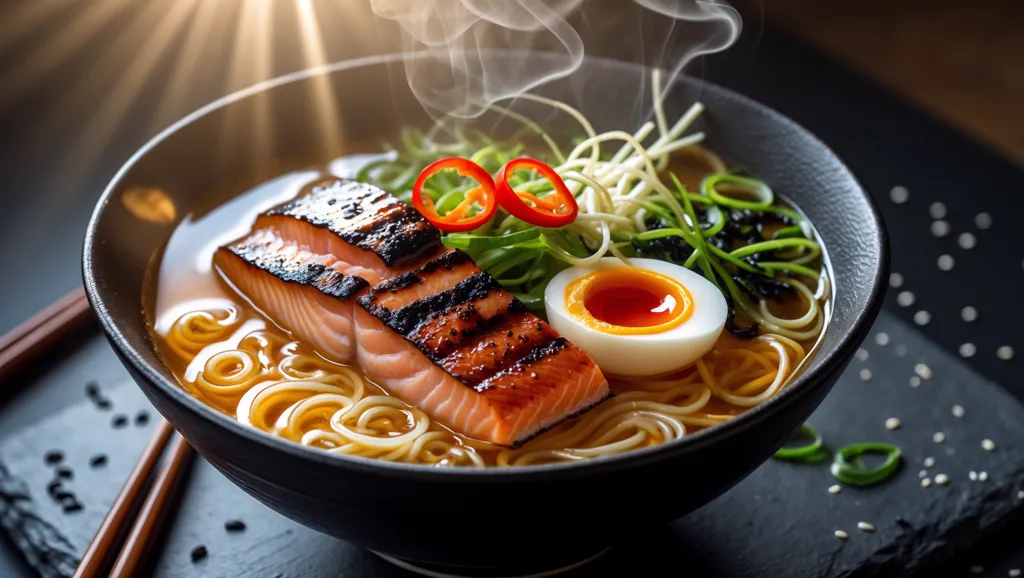

Salmon Ramen Recipe
Learn how to make Wagamama-style salmon ramen with this quick and easy recipe! How to cook tender salmon in rich miso broth with perfect noodles. Restaurant-quality ramen recipe ready in 30 minutes at home.
Prep
Cook
Serve
Kcal
- 200g fresh salmon fillet, skin removed
- 2 portions fresh ramen noodles (or 150g dried ramen noodles)
- 1.2 litres chicken stock (or vegetable stock)
- 2 tbsp white miso paste
- 1 tbsp soy sauce
- 1 tsp sesame oil
- 1 tsp mirin (or 1 tsp rice vinegar with pinch of sugar)
- 2 spring onions, finely sliced
- 1 sheet nori seaweed, cut into strips
- 2 soft-boiled eggs, halved
- 100g bamboo shoots, sliced (or tinned bamboo shoots, drained)
- 50g sweetcorn kernels
- 1 tsp vegetable oil
- 1 clove garlic, minced
- 1 tsp fresh ginger, grated
- Salt and white pepper to taste
- Chilli oil for serving (optional)
Step 1
Start by preparing your soft-boiled eggs if you haven't already. Bring water to a rolling boil, gently lower room temperature eggs into the water and cook for exactly 6 minutes for a runny yolk. Immediately transfer to ice water, let cool for 2 minutes, then carefully peel and set aside. Cut in half just before serving.Step 2
Cut your salmon fillet into bite-sized cubes, approximately 2cm pieces. Season lightly with salt and set aside at room temperature for 10 minutes to allow the seasoning to penetrate.Step 3
In a small bowl, whisk together the miso paste with 3 tablespoons of warm stock until completely smooth - this prevents lumpy miso in your broth. Add the soy sauce, sesame oil, and mirin, whisking until well combined. This is your tare (flavour base).Step 4
Heat the vegetable oil in a large saucepan over medium-high heat. Add the minced garlic and grated ginger, stirring constantly for 30 seconds until fragrant but not browned. Pour in the remaining stock and bring to a gentle simmer.Step 5
Add the miso mixture to the simmering stock, stirring gently to combine. Taste and adjust seasoning with salt and white pepper. Keep the broth at a gentle simmer - avoid vigorous boiling as this can make the miso cloudy.Step 6
Cook your ramen noodles according to package instructions in a separate pot of boiling water. Fresh noodles typically take 2-3 minutes, while dried noodles may take 3-5 minutes. Drain thoroughly and divide between two large ramen bowls.Step 7
Add the salmon cubes to the simmering broth and cook for 2-3 minutes until the salmon is just cooked through but still tender. The fish should flake easily but not fall apart completely.Step 8
Using a ladle, carefully pour the hot broth and salmon over the noodles in each bowl, ensuring an even distribution of salmon pieces. The broth should cover the noodles generously.Step 9
Arrange your toppings beautifully on top: place the halved soft-boiled eggs cut-side up, scatter the bamboo shoots and sweetcorn kernels around the bowl, and arrange the nori strips artfully. Finish with a generous sprinkle of sliced spring onions.Step 10
Serve immediately while piping hot, with chilli oil on the side for those who like extra heat. Provide chopsticks and a soup spoon, and remind diners to slurp - it's not only acceptable but encouraged for the full ramen experience!
What ingredients are used in Salmon Ramen from Wagamama?
Key ingredients include fresh salmon fillet, ramen noodles, chicken stock, white miso paste, soft-boiled eggs, bamboo shoots, sweetcorn, nori seaweed, spring onions, soy sauce, sesame oil, and mirin for an authentic Japanese flavour.
How to cook Salmon Ramen from Wagamama at home?
Learn how to cook Salmon Ramen from Wagamama by preparing a miso-based broth with aromatics, cooking fresh ramen noodles separately, gently poaching salmon cubes in the broth, then assembling with traditional toppings like soft-boiled eggs and nori.
How long should you cook salmon in ramen broth?
Cook salmon cubes in simmering ramen broth for just 2-3 minutes until the fish is cooked through but still tender. The salmon should flake easily but not fall apart completely to maintain texture and visual appeal.
What's the best way to prepare soft-boiled eggs for ramen?
Boil eggs for exactly 6 minutes for a perfect runny yolk, then immediately transfer to ice water for 2 minutes. This timing creates the ideal jammy texture that's traditional in authentic ramen bowls.
Can you substitute miso paste in salmon ramen?
While white miso paste provides the authentic umami flavour, you can substitute with red miso for a stronger taste or use additional soy sauce and dashi powder, though the flavour profile will differ from traditional miso ramen.