

.svg)

Pad Thai Recipe
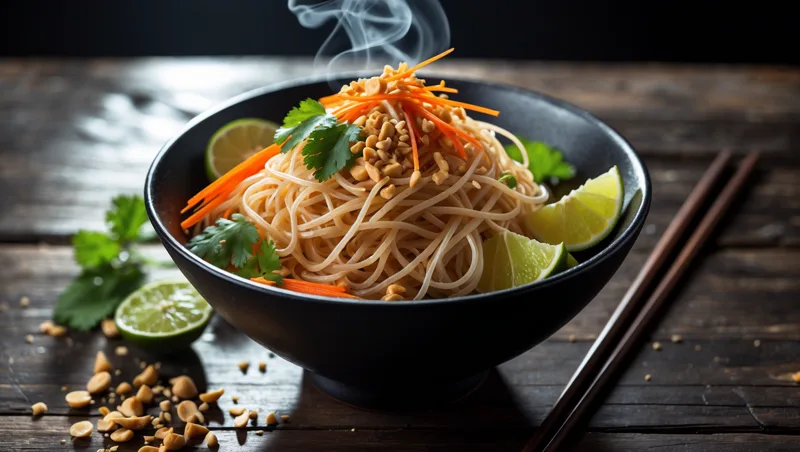
Learn how to make authentic Wagamama pad thai at home with this quick and easy recipe. Master how to cook perfect rice noodles with tangy tamarind sauce, crunchy peanuts, and fresh vegetables for restaurant-quality results.
Prep
Cook
Serve
Kcal
- 200g dried rice noodles (pad thai noodles or flat rice noodles)
- 2 tbsp vegetable oil
- 2 cloves garlic, minced
- 1 red chilli, finely chopped (or chilli flakes to taste)
- 150g firm tofu, cubed
- 2 large eggs
- 100g beansprouts
- 2 spring onions, sliced diagonally
- 50g roasted peanuts, roughly chopped
- 2 tbsp tamarind paste (or lime juice as alternative)
- 2 tbsp fish sauce (or soy sauce for vegetarian option)
- 2 tbsp brown sugar or palm sugar
- 1 tbsp rice vinegar
- 1 lime, cut into wedges
- Fresh coriander leaves for garnish
- Pickled vegetables (optional, for serving)
Step 1
Soak the rice noodles in warm water for 15-20 minutes until they become soft and pliable, but still have a slight bite to them. They shouldn't be completely soft as they'll continue cooking in the wok. Drain thoroughly and set aside.Step 2
In a small bowl, whisk together the tamarind paste, fish sauce, brown sugar, and rice vinegar to create your pad thai sauce. Stir until the sugar completely dissolves and the mixture is smooth. Taste and adjust the balance of sweet, sour, and salty flavours to your preference.Step 3
Heat 1 tablespoon of vegetable oil in a large wok or heavy-based frying pan over high heat. Add the cubed tofu and stir-fry for 2-3 minutes until golden on all sides. Remove the tofu from the wok and set aside on a plate.Step 4
Add the remaining tablespoon of oil to the same wok. Add the minced garlic and chopped chilli, stir-frying for 30 seconds until fragrant but not burnt. The oil should sizzle immediately when you add the aromatics.Step 5
Push the garlic and chilli to one side of the wok and crack the eggs into the empty space. Scramble the eggs for about 1 minute, breaking them up with your spatula into small, fluffy pieces. Mix the scrambled eggs with the garlic and chilli.Step 6
Add the drained rice noodles to the wok along with the prepared sauce. Using tongs or two spatulas, toss everything together vigorously for 2-3 minutes, ensuring the noodles are well coated and heated through. The noodles should be glossy and slightly caramelised.Step 7
Return the golden tofu to the wok and add the beansprouts and most of the spring onions (reserve some for garnish). Continue stir-frying for another 1-2 minutes until the beansprouts are just wilted but still retain their crunch.Step 8
Remove from heat and transfer to serving plates. Garnish with the remaining spring onions, chopped roasted peanuts, fresh coriander leaves, and lime wedges. Serve immediately while hot, with pickled vegetables on the side if desired. Encourage diners to squeeze lime juice over their portion and mix in the peanuts for authentic flavour and texture.
What ingredients are used in Pad Thai from Wagamama?
Key ingredients include rice noodles, tofu, eggs, beansprouts, tamarind paste, fish sauce, brown sugar, garlic, chilli, peanuts, spring onions, and fresh coriander for an authentic Thai flavour.
How to cook Pad Thai from Wagamama at home?
Learn how to cook Pad Thai from Wagamama by soaking rice noodles, preparing the sweet-sour-salty sauce, stir-frying tofu until golden, scrambling eggs, then tossing everything together in a hot wok with beansprouts and aromatics for authentic results.
What type of noodles work best for authentic pad thai?
Flat rice noodles or pad thai noodles work best. Soak them in warm water for 15-20 minutes until soft but still slightly firm, as they'll continue cooking in the wok during stir-frying.
Can I make pad thai without fish sauce for vegetarians?
Yes, substitute fish sauce with soy sauce for a vegetarian version. You can also use tamari or light soy sauce to maintain the salty umami flavour that's essential to authentic pad thai taste.
What's the secret to getting the perfect pad thai sauce balance?
The perfect pad thai sauce balances sweet, sour, and salty flavours using tamarind paste, fish sauce, and brown sugar. Taste and adjust ratios - it should be tangy, slightly sweet, and savoury.