

.svg)
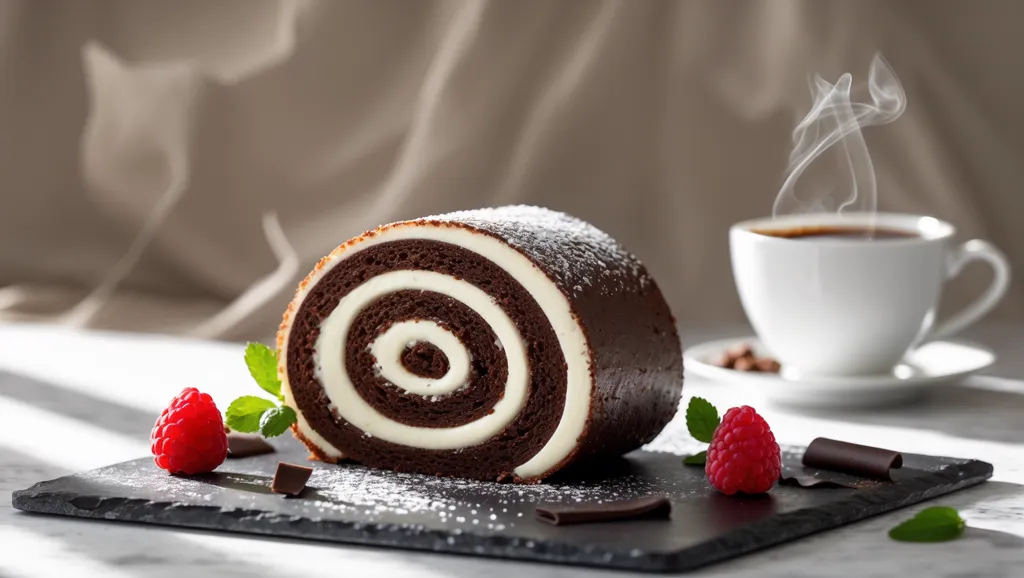
Chocolate Swiss Roll Recipe
Learn how to make this quick and easy chocolate swiss roll recipe with fluffy sponge and creamy filling. Perfect how to cook guide for beginners. Classic dessert recipe that's simple yet impressive for any occasion.
Prep
Cook
Serve
Kcal
- 4 large eggs
- 100g caster sugar, plus extra for dusting
- 75g self-raising flour
- 25g cocoa powder
- 1 tsp vanilla extract
- 300ml double cream
- 2 tbsp icing sugar, plus extra for dusting
- 1 tsp vanilla extract, for the filling
- 50g dark chocolate, melted (optional, for drizzling)
Step 1
Preheat your oven to 200°C (180°C fan/400°F). Grease and line a 33cm x 23cm Swiss roll tin with baking parchment, letting the paper overhang the edges slightly for easy removal later.Step 2
Whisk the eggs and caster sugar together in a large bowl with an electric whisk for 4-5 minutes, until the mixture is very pale, thick and has roughly tripled in volume, this whisking is what gives the sponge its lightness without any butter, so don't rush it. The mixture should leave a thick ribbon trail when you lift the whisk.Step 3
Sift the flour and cocoa powder over the whisked mixture, then gently fold in with a large metal spoon or spatula, using a figure-of-eight motion to keep as much air in as possible. Fold in the vanilla extract at the same time. Stop folding as soon as no streaks of flour remain.Step 4
Pour the batter into your prepared tin and gently spread into an even layer right into the corners with a spatula. Bake for 10-12 minutes, until well risen, springy to the touch, and coming away slightly from the edges of the tin.Step 5
While the sponge bakes, lay a clean tea towel out on your worktop and dust generously with caster sugar. As soon as the sponge comes out of the oven, turn it out onto the sugared tea towel and carefully peel away the lining paper.Step 6
Working quickly while the sponge is still warm, use the tea towel to help you roll the sponge up from one short end, rolling the tea towel inside as you go. Leave to cool completely in this rolled shape, this trains the sponge to hold its curl and stops it cracking later.Step 7
For the filling, whip the double cream, icing sugar and vanilla extract together until it holds soft peaks, be careful not to overwhip or it will turn grainy.Step 8
Once the sponge is completely cool, carefully unroll it (it should now hold a gentle curve). Spread the whipped cream evenly over the surface, leaving a small border around the edges, then re-roll the sponge tightly, this time without the tea towel inside.Step 9
Trim the ends neatly with a sharp knife for a clean finish, then transfer to a serving plate, seam-side down. Dust with icing sugar, or drizzle with the melted dark chocolate if you like, and slice to serve.
What ingredients are used in Chocolate Swiss Roll Recipe?
Key ingredients include eggs, caster sugar, plain flour, cocoa powder, baking powder, double cream, icing sugar, vanilla extract, and dark chocolate (70% cocoa). Extra cocoa and icing sugar are used for dusting.
How to cook Chocolate Swiss Roll Recipe from scratch at home?
Learn how to cook chocolate swiss roll recipe by whisking eggs and sugar to ribbon stage, folding in sifted dry ingredients, baking the sponge for 10-12 minutes, rolling whilst warm in a tea towel, then filling with chocolate cream once cooled.
What's the best technique for rolling a Swiss roll without cracking?
Roll the sponge whilst still warm in a cocoa-dusted tea towel, score a line 2cm from the edge first, and roll tightly. Let it cool completely in this shape to set before unrolling and adding filling.
How long should you whisk eggs and sugar for a perfect Swiss roll sponge?
Whisk eggs and caster sugar for 5-8 minutes using an electric whisk until thick, pale, and creamy. The mixture should reach ribbon stage where it holds its shape when the whisk is lifted.
What's the ideal baking time and temperature for chocolate sponge cake?
Bake at 200°C for 10-12 minutes until the sponge springs back when touched and starts shrinking from edges. Overbaking makes rolling difficult, so watch carefully for these visual cues.