"
Perfect blend of spicy and cheesy!|Kimchi adds amazing tangy kick here!|Best comfort food on cold nights!|Ramen noodles absorb flavors beautifully perfectly!|Cheese melts into pure heaven magic!|Sausages make it extra hearty satisfying!|Authentic Korean flavors in every bite!|Making this weekly for dinner now!
"
Budae Jjigae Recipe
Signature
Featured

Budae Jjigae Recipe

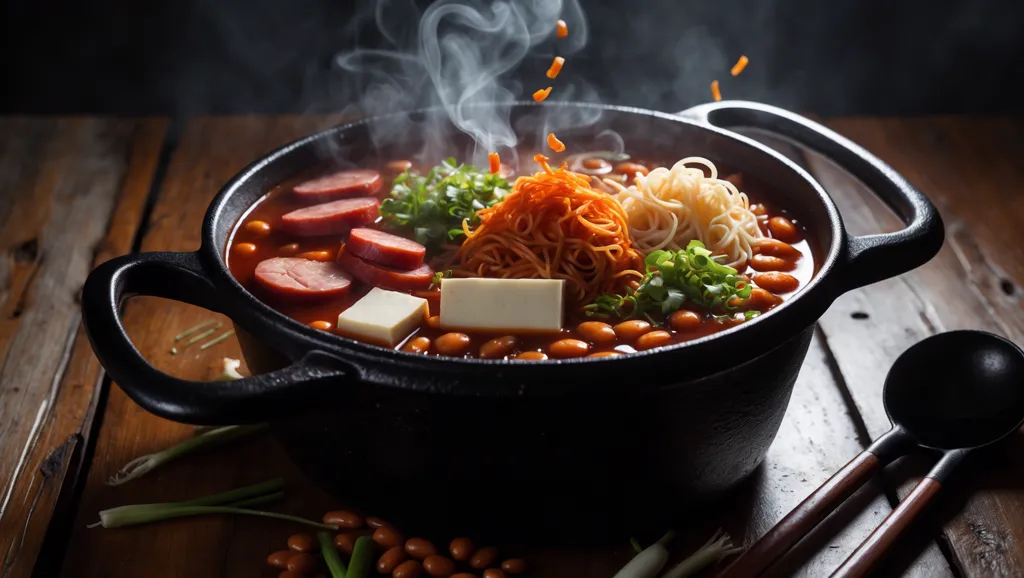
Learn how to make authentic budae jjigae with this quick and easy recipe! How to cook Korean army stew with kimchi, ramen, and cheese. Perfect comfort food recipe ready in 30 minutes.

Prep

15 mins

Cook

20 mins

Serve

4

Kcal

380
Rate this recipe
★★★★★No ratings yet
FAQ for
Budae Jjigae Recipe

What ingredients are used in Budae Jjigae Recipe?

Budae jjigae uses beef brisket, turkey sausages, ham, tofu, shiitake mushrooms, kimchi, baked beans, instant ramen noodles, gochujang, stock, and processed cheese. These ingredients create the signature Korean army stew flavour.

How to cook Budae Jjigae from Korean cuisine at home?

Learn how to cook budae jjigae recipe by first browning beef with aromatics, adding kimchi and gochujang, then simmering with stock. Arrange proteins and vegetables, add ramen noodles, top with melting cheese, and serve hot in the pot for authentic Korean dining.

What's the best type of kimchi for Korean army stew?

Well-fermented, sour kimchi works best for budae jjigae as it adds depth and tang to the broth. Avoid fresh kimchi as it lacks the complex flavours that develop during fermentation, which are essential for authentic taste.

Can you substitute gochujang in Korean stew recipes?

Yes, you can substitute gochujang with sriracha mixed with miso paste, or Korean chilli flakes (gochugaru) with a touch of sugar. However, authentic gochujang provides the best flavour balance for traditional budae jjigae.

What's the perfect cooking time for ramen noodles in hot pot stews?

Cook instant ramen noodles for 2-3 minutes in simmering broth until tender but still slightly firm. Overcooking makes them mushy, and they'll continue softening in the hot stew even after removing from heat.

The calorie count is an approximation and can vary based on exact measurements and specific ingredients used. Always consult nutritional information if strict adherence to calorie counts is required. This recipe has been independently developed for home cooking.
Try GrittyChef

Love This Recipe?
Create Your Own in 10 Seconds

Get unlimited personalized recipes tailored to your exact preferences with GrittyChef.

Create My Recipe
8,400+ users
Cancel anytime
$7/month
156 creating now
⭐ PREMIUM

Personal Recipe Generator

Create delicious recipes instantly

🔥Popular Recipes
🍔 Cheeseburger
🍕 Pizza
🥓 Burrito

Customize Your Recipe

Select your cooking preferences

Grilling
Baking
Frying
Steaming
Mild
Medium
Hot
Keto
Vegan
Paleo
2
4
6
8

GrittyChef is Cooking...

Creating your perfect recipe ✨

👨‍🍳

Chef's Kiss!

Your recipe is ready

Get ready to cook something delicious

👨‍🍳 GrittyChef AI Chef

🍔 Classic Cheeseburger

⏱️ 20 mins
👥 4 servings
🔥 Hot
🛒Ingredients
  • 1.5 lbs ground beef
  • 4 burger buns
  • 4 cheddar slices
  • Lettuce, tomato
👨‍🍳Instructions
1
{ "@context": "https://schema.org", "@type": "Recipe", "@id": "https://www.grittychef.com/recipes/korean-budae-jjigae-army-stew-recipe#recipe", "name": "Korean Budae Jjigae Army Stew Recipe", "image": ["https://cdn.leonardo.ai/users/4a58fbf3-54bf-417d-a8aa-9bdd9b72d9ff/generations/67d09695-4b4a-48e9-be7d-8bf8c36e188e/Phoenix_10_Image_Description_A_dramatic_45degree_angle_shot_ca_0.jpg"], "author": { "@type": "Person", "name": "Peter Martin", "jobTitle": "Chef", "url": "https://www.grittychef.com" }, "publisher": { "@type": "Organization", "name": "GrittyChef", "url": "https://www.grittychef.com", "logo": { "@type": "ImageObject", "url": "https://cdn.prod.website-files.com/68179523ed0aeea15c49bade/690376118ebfd7be919eabab_gritty-chef-logo.png" } }, "datePublished": "2026-04-08", "dateModified": "2026-04-08", "description": "Hearty Korean army stew combining beef, processed meats, kimchi, tofu, ramen noodles, and melted cheese in spicy gochujang broth.", "url": "https://www.grittychef.com/recipes/korean-budae-jjigae-army-stew-recipe", "prepTime": "PT15M", "cookTime": "PT25M", "totalTime": "PT40M", "keywords": "spicy stew, comfort food, one pot meal, sharing dish", "recipeYield": "4 servings", "recipeCategory": "Main Course", "recipeCuisine": "Korean", "cookingMethod": "Simmering", "nutrition": { "@type": "NutritionInformation", "calories": "680 calories", "carbohydrateContent": "42 g", "proteinContent": "38 g", "fatContent": "35 g", "saturatedFatContent": "15 g", "cholesterolContent": "95 mg", "sodiumContent": "1800 mg", "sugarContent": "8 g", "servingSize": "1 serving" }, "recipeIngredient": [ "200g beef brisket or chuck, thinly sliced (or chicken thigh, thinly sliced)", "100g turkey sausages, sliced diagonally (or chicken sausages)", "100g turkey ham, diced (or chicken ham)", "200g firm tofu, cut into 2cm cubes", "150g shiitake mushrooms, stems removed and caps sliced", "1 medium onion, sliced", "200g kimchi, roughly chopped", "100g baked beans in tomato sauce", "200g instant ramen noodles (2 packets)", "2 spring onions, cut into 5cm lengths", "1 litre chicken or beef stock", "2 tbsp gochujang (Korean chili paste)", "1 tbsp soy sauce", "1 tsp sesame oil", "2 cloves garlic, minced", "1 tsp grated fresh ginger", "1 tbsp vegetable oil", "200g processed cheese slices (or mozzarella)", "Salt and pepper to taste" ], "recipeInstructions": [ { "@type": "HowToStep", "name": "Cook beef", "text": "Heat the vegetable oil in a large, heavy-bottomed pot or Korean earthenware pot (ttukbaegi) over medium-high heat. Add the sliced beef and cook for 3-4 minutes, stirring frequently until the meat changes colour and starts to brown slightly." }, { "@type": "HowToStep", "name": "Add aromatics", "text": "Add the minced garlic and grated ginger to the pot, stirring for about 30 seconds until fragrant. Be careful not to let them burn as this will create a bitter taste." }, { "@type": "HowToStep", "name": "Cook onions", "text": "Add the sliced onion and cook for 2-3 minutes until they start to soften and become translucent. The onions should still have a bit of bite to them at this stage." }, { "@type": "HowToStep", "name": "Stir-fry kimchi", "text": "Add the chopped kimchi to the pot and stir-fry for 2-3 minutes. This step is crucial as it helps to develop the deep, complex flavours that make budae jjigae so delicious. The kimchi should start to caramelise slightly." }, { "@type": "HowToStep", "name": "Add gochujang paste", "text": "In a small bowl, mix the gochujang with 3 tablespoons of warm water to create a smooth paste. Add this paste to the pot along with the soy sauce, stirring well to combine with all the ingredients." }, { "@type": "HowToStep", "name": "Add stock", "text": "Pour in the chicken or beef stock, ensuring it covers all the ingredients. Bring the mixture to a rolling boil over high heat, then reduce to medium heat and let it simmer for 8-10 minutes to allow the flavours to meld together beautifully." }, { "@type": "HowToStep", "name": "Arrange proteins", "text": "Carefully arrange the sliced sausages, diced ham, cubed tofu, and sliced mushrooms in the simmering broth. Try to keep similar ingredients grouped together as this makes for a more attractive presentation when serving." }, { "@type": "HowToStep", "name": "Add baked beans", "text": "Add the baked beans to one section of the pot, allowing them to heat through for 2-3 minutes. The beans add a lovely sweetness that balances the spicy and salty flavours perfectly." }, { "@type": "HowToStep", "name": "Cook noodles", "text": "Gently add the instant ramen noodles to the pot, pushing them down into the broth with a ladle or chopsticks. Cook for 2-3 minutes until the noodles are tender but still have a slight bite. Don't overcook them as they'll continue to soften in the hot broth." }, { "@type": "HowToStep", "name": "Melt cheese", "text": "Arrange the cheese slices on top of the stew, allowing them to melt slowly into the bubbling broth. This creates those gorgeous cheese pulls that make budae jjigae so Instagram-worthy and delicious." }, { "@type": "HowToStep", "name": "Final seasoning", "text": "Scatter the spring onion pieces over the top and drizzle with sesame oil. Let everything simmer together for another 2-3 minutes, then taste and adjust seasoning with salt, pepper, or additional gochujang if you prefer more heat." }, { "@type": "HowToStep", "name": "Serve hot", "text": "Serve immediately while piping hot, ideally with steamed rice on the side. The beauty of budae jjigae is that it's meant to be shared, so place the pot in the centre of the table and let everyone dig in together, Korean family-style." } ], "aggregateRating": { "@type": "AggregateRating", "ratingValue": 4.9, "bestRating": 5, "worstRating": 1, "ratingCount": 1 }, "review": [ { "@type": "Review", "author": { "@type": "Person", "name": "Peter Martin" }, "datePublished": "", "reviewBody": "The kimchi caramelization creates incredible depth while processed cheese adds that signature army stew comfort factor.", "name": "Chef's Rating", "reviewRating": { "@type": "Rating", "ratingValue": 4.9, "bestRating": 5, "worstRating": 1 } } ] }
{ "@context": "https://schema.org", "@type": "FAQPage", "mainEntity": [ { "@type": "Question", "name": "What ingredients are used in Budae Jjigae Recipe?", "acceptedAnswer": { "@type": "Answer", "text": "Budae jjigae uses beef brisket, turkey sausages, ham, tofu, shiitake mushrooms, kimchi, baked beans, instant ramen noodles, gochujang, stock, and processed cheese. These ingredients create the signature Korean army stew flavour." } }, { "@type": "Question", "name": "How to cook Budae Jjigae from Korean cuisine at home?", "acceptedAnswer": { "@type": "Answer", "text": "Learn how to cook budae jjigae recipe by first browning beef with aromatics, adding kimchi and gochujang, then simmering with stock. Arrange proteins and vegetables, add ramen noodles, top with melting cheese, and serve hot in the pot for authentic Korean dining." } }, { "@type": "Question", "name": "What's the best type of kimchi for Korean army stew?", "acceptedAnswer": { "@type": "Answer", "text": "Well-fermented, sour kimchi works best for budae jjigae as it adds depth and tang to the broth. Avoid fresh kimchi as it lacks the complex flavours that develop during fermentation, which are essential for authentic taste." } }, { "@type": "Question", "name": "Can you substitute gochujang in Korean stew recipes?", "acceptedAnswer": { "@type": "Answer", "text": "Yes, you can substitute gochujang with sriracha mixed with miso paste, or Korean chilli flakes (gochugaru) with a touch of sugar. However, authentic gochujang provides the best flavour balance for traditional budae jjigae." } }, { "@type": "Question", "name": "What's the perfect cooking time for ramen noodles in hot pot stews?", "acceptedAnswer": { "@type": "Answer", "text": "Cook instant ramen noodles for 2-3 minutes in simmering broth until tender but still slightly firm. Overcooking makes them mushy, and they'll continue softening in the hot stew even after removing from heat." } } ] }